Villa Almyrida · Apokoronas, Chania
The coast around Almyrida is one of the most varied stretches of shoreline in western Crete. Freshwater springs, deserted pebble coves, tiny fishing harbours, and shallow turquoise bays — all within twenty minutes of the villa. These are the ones the tourist maps don't show.
Villa Almyrida sits 200 metres from the Almyrida beach — close enough to walk down in the morning with a towel and a coffee, and return for lunch. But the beach at Almyrida itself, while genuinely beautiful with its calm, shallow water and mountain backdrop, is just the beginning.
The coast on either side of Almyrida changes character within a few kilometres. West along Souda Bay, Kalyves has a long Blue Flag beach and a river running through the middle of the village. East, past Paleloni, the sand gives out entirely and the shore becomes limestone shelf dropping into some of the clearest water in western Crete.
The sea in this part of Crete is some of the clearest on the island. The bay is sheltered from the north by the Apokoronas hills, which means the water is calm even when the meltemi wind blows. Swimming here — whether in August or October — is something people return to Crete specifically for.
The Almyrida bay is exceptionally sheltered and calm, making it ideal for families with children and for snorkelling. The sea floor is sandy and the water clears to 8–10 metres visibility in calm conditions. Best snorkelling is at the rocky headlands east and west of the main beach.
May through October. September and October offer the best combination of warm water and uncrowded beaches. August is the busiest but the sea is at its peak: calm, warm, and a shade of blue that makes every photograph look like it's been filtered.
Snorkel and mask — worth packing even if you've never used one, the underwater landscape at the rocky headlands is remarkable. Water shoes for the pebble beaches. Sun shade — some of the more remote coves have no natural shelter from the afternoon sun.
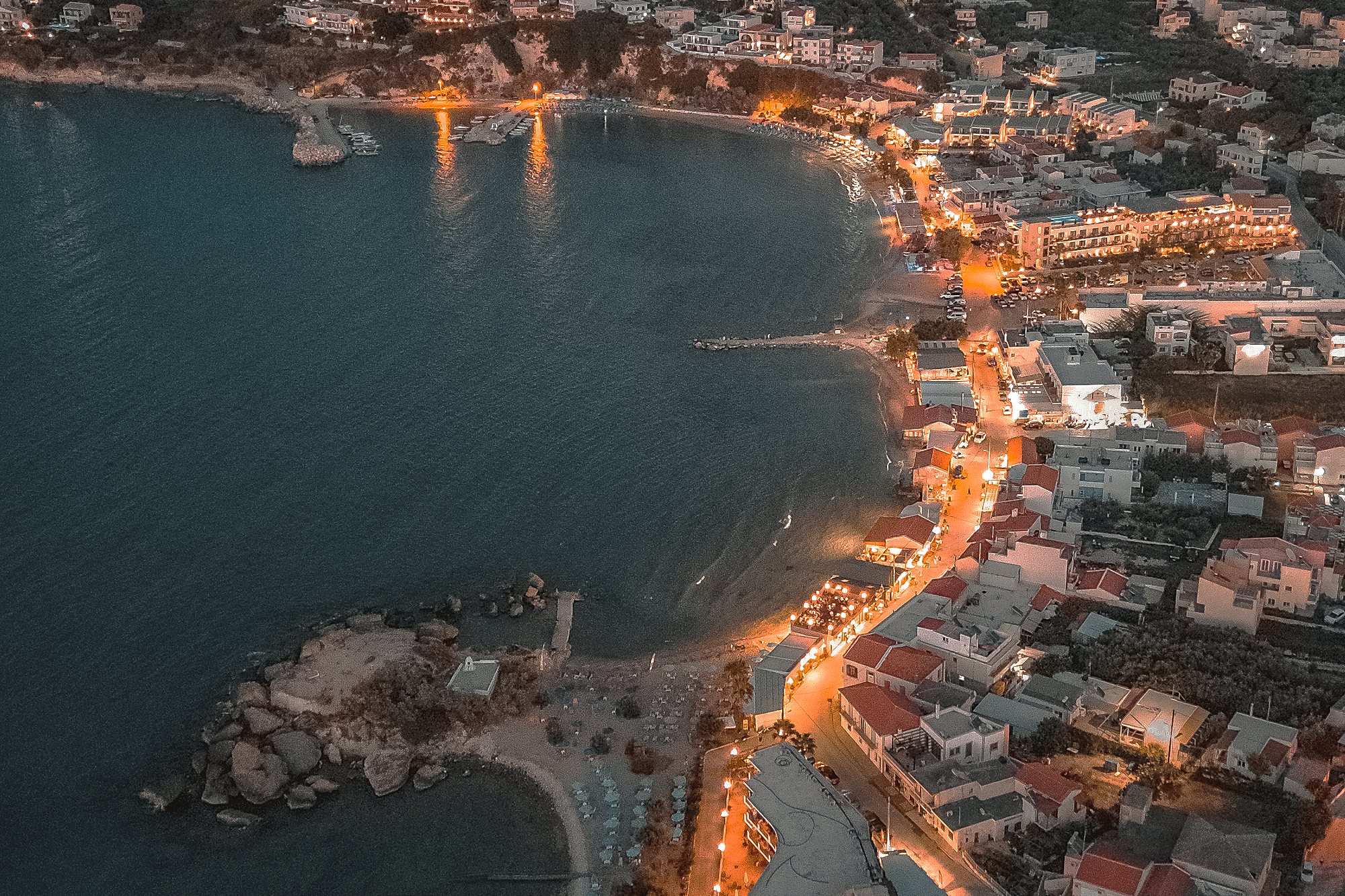
Each beach in this list has something the others don't. Choose by mood.
The beach at Almyrida is a long arc of fine sand and pebble mix, sheltered by the headlands on either side and shallow enough for children to paddle safely. A handful of fish tavernas line the waterfront — the best ones are away from the main road, facing the sea. The sunsets from the west end of the beach, looking towards the White Mountains, are reliably excellent.
On weekdays in May, September, and October, you can have much of this beach to yourself by 9am. In August it fills by 10am but the water remains perfectly calm — the bay is too sheltered to get rough. Walk east along the shoreline path to find the quieter sections away from the tavernas.
Kalyves sits on the southern shore of Souda Bay, a short drive west along the coast. Its long Blue Flag beach shelves gently and the village behind it is a working one rather than a resort — bakeries, a butcher, tavernas that serve Cretans as much as visitors.
The village is split by the Kyliaris river, also called the Xydas, which rises high in the White Mountains: the old quarter sits on the west bank, the newer village on the east. On the hill above stand the ruins of Castel Apricorno, a fortress raised in 1206 by the Genoese during their brief hold on Crete, before the Venetians took the island. Many researchers place it on the site of ancient Ippokoronas — the settlement that gave Apokoronas its name.
There is no sand at Ombros Gialos. The coast here is limestone shelf, with a platform to lie on, steps cut down into the water and a small dock to dive from. What it has instead is clarity — this is widely held to be the best snorkelling and diving water in Apokoronas, deep and startlingly turquoise almost immediately off the rocks. It has been approved to become the first diving park in Greece.
It lies between the villages of Paleloni and Kefalas. Take the Kalyves–Kefalas–Georgioupolis road and turn downhill at Paleloni; the asphalt runs all the way to the water. There is a fish taverna and nothing else at all, so bring what you need for the day. Masks and fins are worth packing even if you never normally bother.
Almyrida village has a small car park near the beach that fills by 10am in August. Kalyves has more parking, though the streets nearest the beach go early in high season. At Ombros Gialos the asphalt road ends at the water and parking is informal and limited — go early or go late.
The rocky headlands at either end of Almyrida beach are good, but Ombros Gialos is the one worth planning a morning around — deep, clear water straight off the rocks, and the reason the site has been approved as Greece's first diving park. Bring your own mask; rental is available in the village but stock is limited.
Almyrida village has three or four tavernas on the beachfront — the best ones serve fresh fish rather than tourist menus. Kalyves has more choice, and more of it aimed at locals. Ombros Gialos has a single fish taverna and nothing else, so if you want a full day there, take water and lunch with you.
200 metres from the sea, with a private pool for the days you don't want to leave. The best base for exploring the Apokoronas coast at your own pace.
Explore Villa Almyrida →