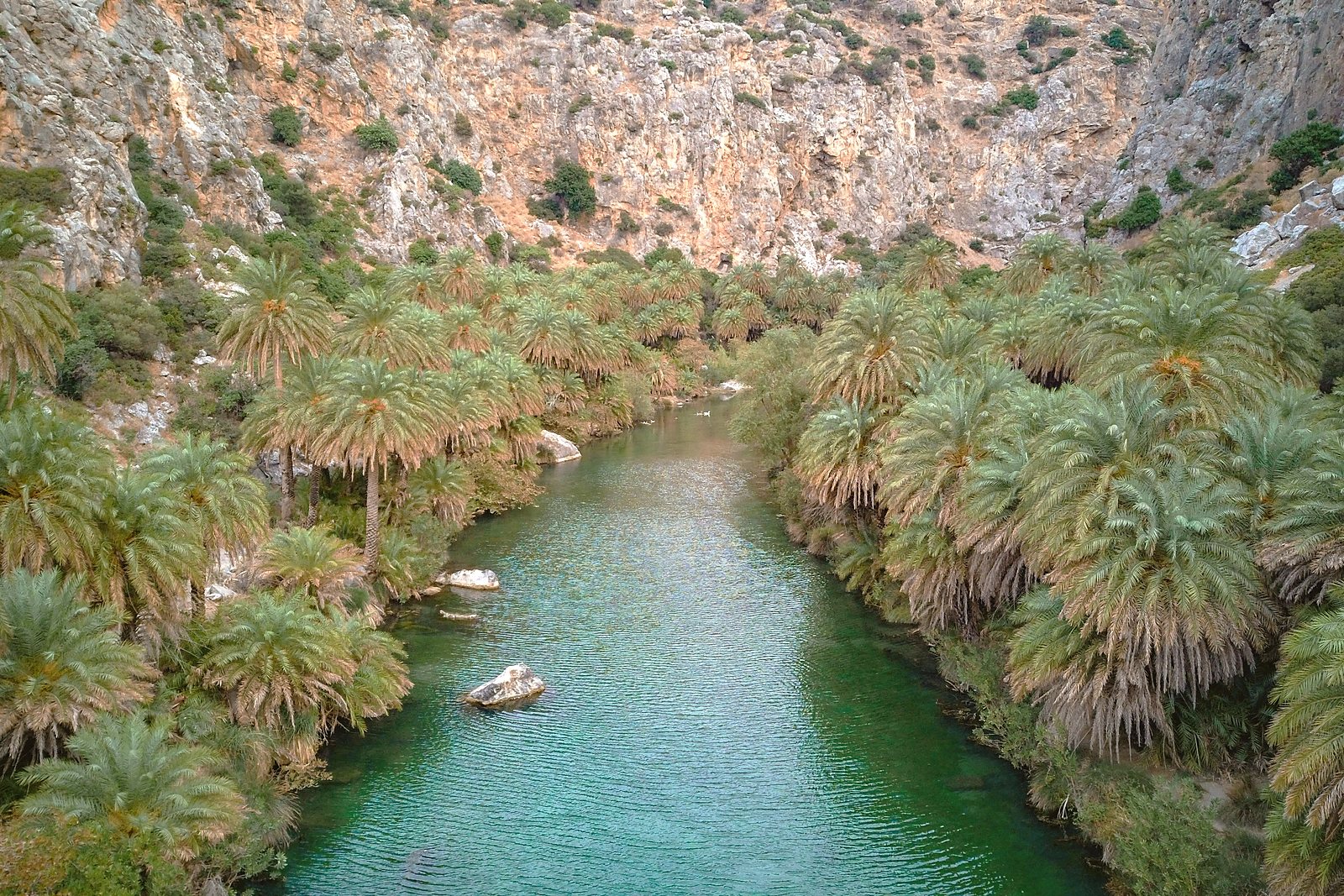
Horizon Villa Kastellos · Rethymno, Crete

Ancient Hills.
Timeless Crete.

A 3,000-year-old village, the greatest Minoan necropolis on the island, a freedom-defining monastery, and the most storied old town in Crete — all from your doorstep.

420 m Above sea level
11 km From Rethymno
3200 BC First settlement
Explore

The Village That Sits on Top of a Civilisation

Kastellos is not simply an old village. It is very likely a Minoan city — or the continuation of one. Archaeologists have long theorised that somewhere beneath and around this hilltop settlement lies the great urban centre that gave rise to one of the most important cemeteries of the Bronze Age, the Minoan Necropolis of Armeni, barely five minutes' drive away.

Sitting at 420 metres on its commanding ridge, Kastellos looks north over the coastal plain to the glittering Aegean, east toward the White Mountains, and south into the deep green valleys of central Rethymno. The name itself — from the Italian and Venetian castello — speaks to the fortified acropolis that once stood here: two rows of ancient walls and three towers of later periods are still traceable in the landscape.

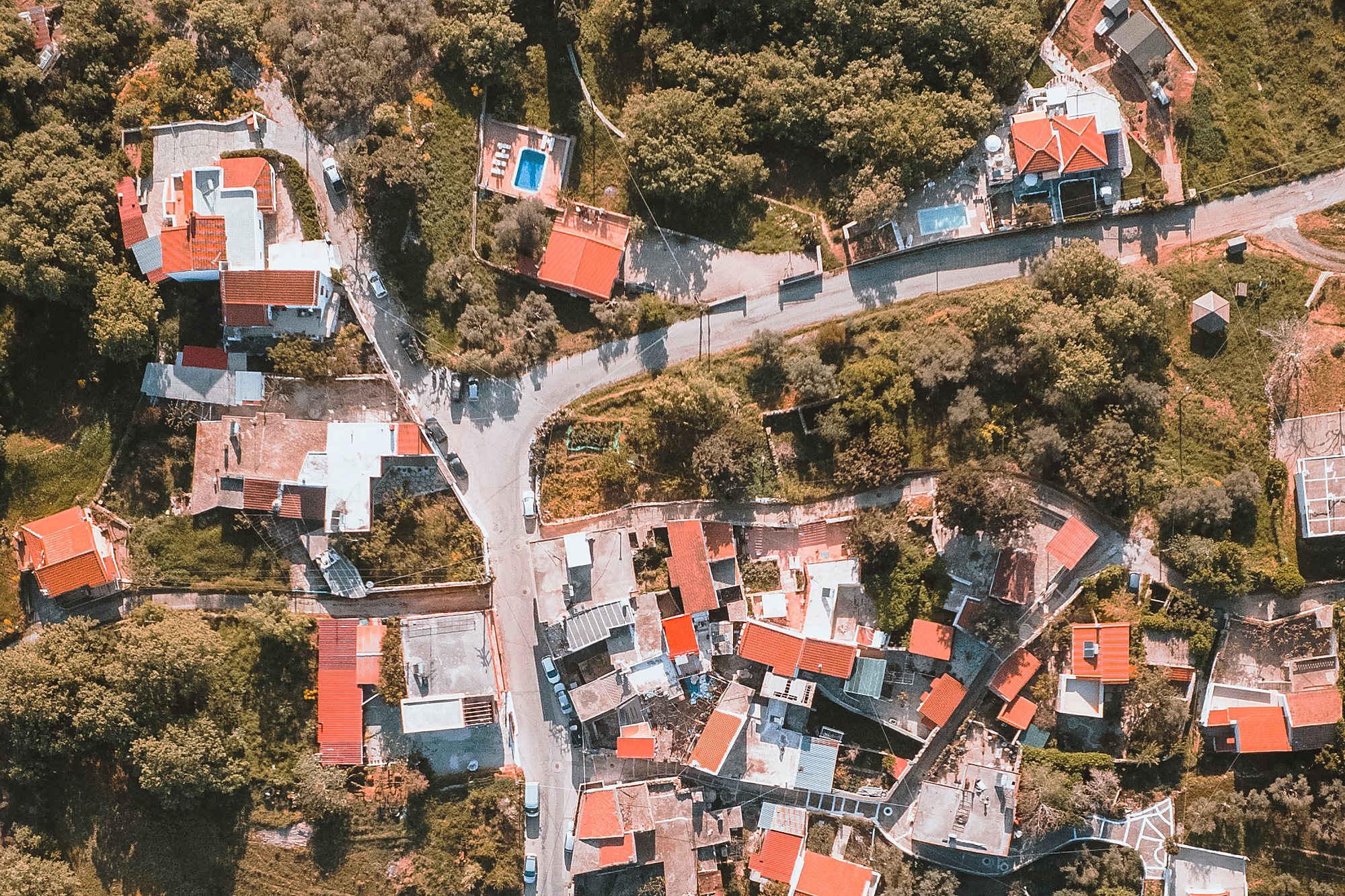
Today the village is small, quietly confident in its character, and possessed of a distinctly gentle pace of life. From Horizon Villa in its centre, the extraordinary landscape of central Crete — Minoan ruins, freedom-fighter monasteries, gorges, pottery villages, and the island's finest medieval city — stretches out in every direction.

From Minoan Acropolis to Listed Traditional Settlement

Modern Kastellos is a listed traditional settlement — a designation by the Greek state recognising its architectural and cultural value. The old primary school has been lovingly converted into the Museum of Oak and Herbs. The taverna run by Maria next to the Villa is locally famous, and a visit to her table is one of the authentic pleasures of a stay here.

Altitude 420 m above sea level
Distance 11 km south of Rethymno
First recorded 1577 Venetian census (Barozzi)
Ancient fortification 2 rows of walls · 3 towers
Village museum Museum of Oak & Herbs
Dining Maria's Taverna — eat here often
"The village of Kastellos stands above a landscape that has been continuously inhabited for over three thousand years — and the Minoans who built their city here may be buried just down the road." — Yannis Tzedakis, lead archaeologist of the Armeni Necropolis

What to See &
Where to Go

Nine extraordinary destinations within easy reach of your villa — from Bronze Age tombs to palm-fringed beaches.

01
Archaeology · Unmissable
01

The Minoan Necropolis of Armeni

Five minutes' drive from your villa, hidden in a grove of ancient holm oaks, lies one of the most extraordinary archaeological sites in the whole of Greece. The Late Minoan Necropolis of Armeni — in use from approximately 1420 to 1200 BC — is the largest Late Minoan cemetery ever discovered: more than 230 rock-cut chamber tombs, each with a long stepped corridor (dromos) leading down into a burial chamber hewn from the soft local limestone.

You can walk directly into several of the largest tombs, including Tomb 159, whose dromos runs 15.5 metres, and the solitary tholos (domed) tomb, Tomb 200. The finds — painted clay sarcophagi, bronze swords, a helmet from 59 boar tusks, gold jewellery, Linear A and Linear B inscriptions — are now in the museums of Rethymno and Chania. Archaeologists believe the Minoan settlement that belonged to this cemetery lies beneath Kastellos itself. The site is largely unknown to mass tourism. You may have it almost entirely to yourself.

~5 min drive
Entry €3 · Closed Tuesdays · 10am–6pm
02
City · History
02

Rethymno — The Old Venetian Town

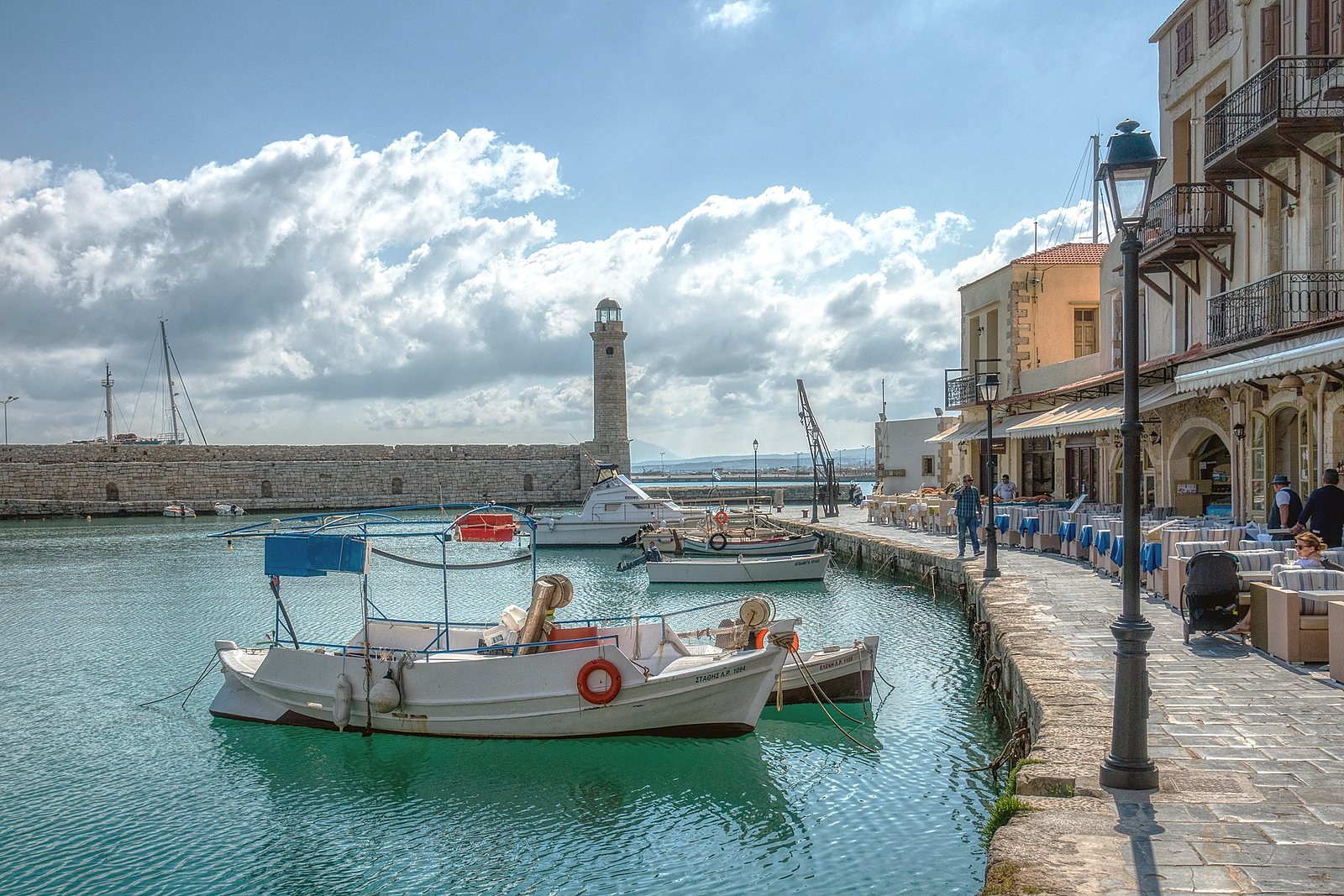
Eleven kilometres north of Kastellos, the old town of Rethymno is considered the finest preserved example of Renaissance-era urban architecture in Greece. Venetian arcaded houses, minarets, Ottoman fountains, loggie, and carved stone doorways crowd together around a cheerful harbour whose Egyptian-built lighthouse has stood since the 1830s.

The Fortezza — the massive Venetian fortress built between 1540 and 1570 — dominates the headland above the harbour and gives sweeping views of the coast and mountains. An evening walk from the harbour into the Venetian lanes, ending with dinner in the backstreets, is close to perfect.

~15 min drive
11 km north
03
Monastery · Unmissable
03

Arkadi Monastery — A European Monument of Freedom

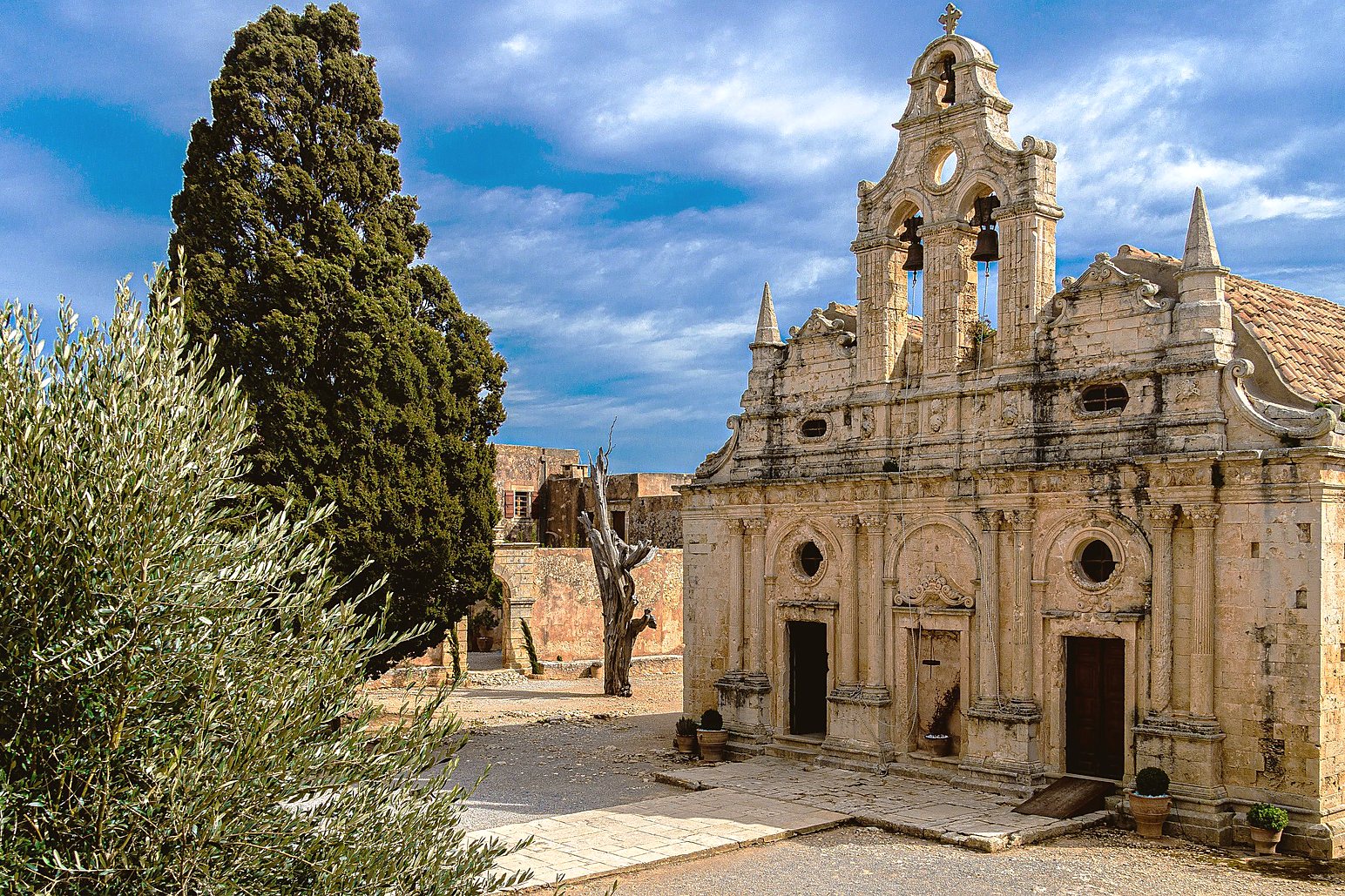
Twenty-three kilometres southeast of Rethymno, set on a fertile plateau ringed by gorges and olive-covered hills, the Monastery of Arkadi is the most historically significant building in the prefecture — and one of the most charged places in all of Crete. Its church, completed in 1587 in a striking fusion of Renaissance and Baroque architecture, is among the most beautiful religious buildings on the island.

In 1866, at the height of the Cretan Revolution, 964 people took refuge inside the fortress-like walls. After three days of siege, with the outer gates breached, the abbot gave the order to ignite the monastery's powder magazine rather than surrender. The explosion killed most of those inside and hundreds of Ottoman soldiers. The news spread across Europe within days — Victor Hugo wrote of it. UNESCO has designated Arkadi as a European Monument of Freedom.

The old powder magazine, the monk cells, the ossuary (where the bones of the fallen are displayed behind glass), and the monastery museum are all visitable. Every year on 8 November, a great commemorative ceremony draws dignitaries and visitors from across Greece.

~35 min drive
Open daily · Entry €3
04
Nature · Lake
04

Lake Kournas

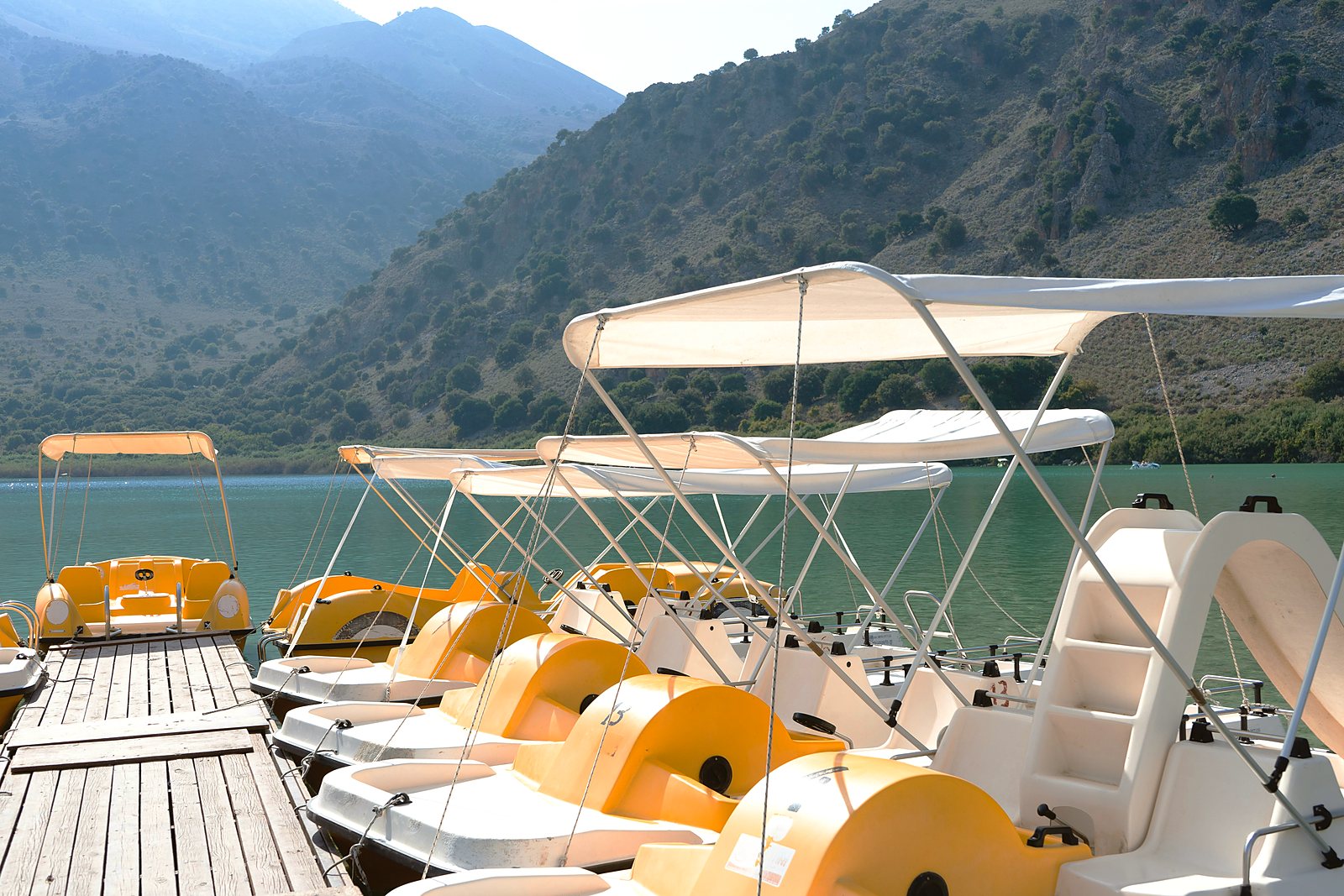
Just 15 minutes from Kastellos toward the Apokoronas coast, Lake Kournas is the only natural freshwater lake on the entire island of Crete. Nestled at the foot of a steep mountain wall in a bowl of hills above Georgioupolis, its spring-fed waters shift from deep turquoise to jade green depending on the light.

Pedal boats are available for hire and from the water you can spot the resident freshwater turtles and eels. The surrounding tavernas serve simple, honest food. An easy afternoon excursion, especially combined with a swim at Georgioupolis beach five kilometres further north.

~15 min drive
Kournas, Apokoronas
05
Village · Craft
05

Margarites — The Pottery Village

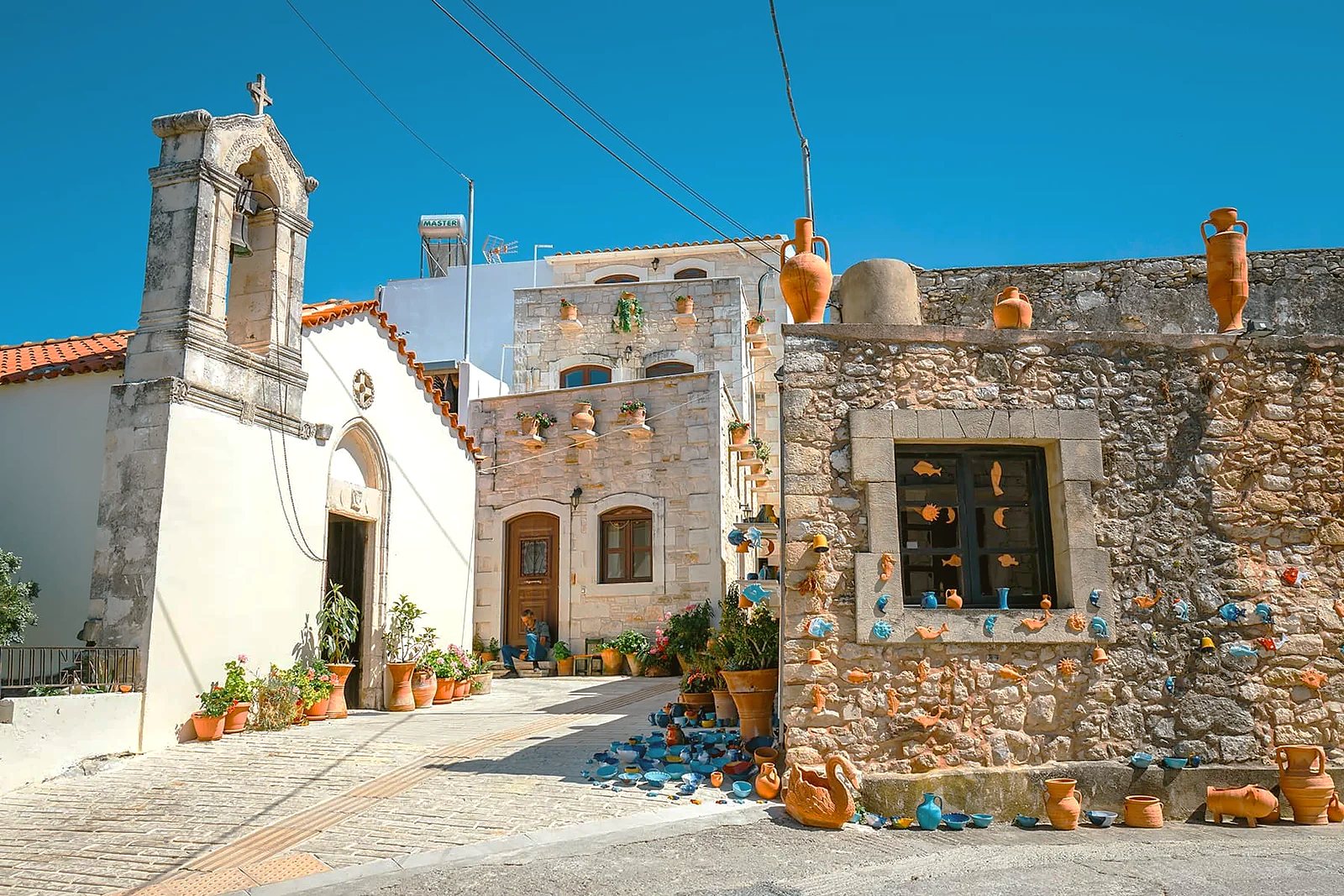
A 20-minute drive east of Kastellos through beautiful hill country, Margarites is the most celebrated pottery-making village on Crete. The tradition here is unbroken from ancient times: the clay of the surrounding hills, the holm oak forests for the kilns, and the hands of local potters have been producing ceramic vessels in exactly this way for over 3,500 years.

Today more than a dozen workshop-boutiques line the village lane, where you can watch potters working at the wheel and buy directly from the maker — pithari (giant storage jars), bowls, plates, and decorative pieces. The village is beautiful, with stone lanes and sweeping views across the valley to the Psiloritis mountains.

~20 min drive
Mylopotamos, Rethymno
06
Archaeology · Museum
06

Ancient Eleftherna & its Museum

One of the most important ancient Greek cities of Crete, Eleftherna flourished from the 9th century BC on a commanding ridge in the Mylopotamos region. Its necropolis has produced the only physical evidence in Crete of funerary customs described in Homer's Iliad, including the cremation of warriors and the sacrifice of prisoners at the funeral pyre.

The site of the ancient city, with its towers, cisterns, and Roman bridge, is freely walkable. The adjacent Museum of Ancient Eleftherna, opened in 2016, is architecturally spectacular and houses the extraordinary finds in a world-class display. Allow at least three hours.

~25 min drive
Eleftherna · Entry €6
07
Nature · Monastery · Beach
07

Kourtaliotis Gorge, Preveli Monastery & Beach

South of Rethymno, the Kourtaliotis Gorge — three kilometres of towering limestone cliffs with a river running through the base, the gorge walls studded with small chapels and caves — is one of the most spectacular natural landmarks in the prefecture. The drive through it alone is extraordinary.

Above the gorge, the Monastery of Preveli played a central role in sheltering Allied soldiers after the Battle of Crete in 1941 and organising their evacuation by submarine. Below, accessible by a steep path through palm trees — one of the only natural palm forests in Europe — Preveli Beach is among the most photogenic on Crete: a river mouth meets the Libyan Sea between cliffs that glow amber and copper at sunset.

~45 min drive
South Rethymno coast
08
Beach
08

Rethymno Beach & the Northern Coast

The long sandy beach that stretches eastward from Rethymno's old town is one of the best urban beaches in Crete — fine golden sand, shallow water, and a Blue Flag designation, with the Fortezza visible on the headland to the west.

To the east, Bali is a beautiful small resort in a sheltered cove, about 30 minutes from Kastellos; its clear water and excellent tavernas make it a justly popular lunch-and-swim destination. Panormos, halfway between Kastellos and Bali, is a quieter option with a small sandy beach and a lovely Byzantine church beside the sea.

~15–30 min drive
North coast
09
Cave · History
09

Melidoni Cave

About 30 minutes northwest of Kastellos, the Cave of Melidoni is one of the most important archaeological caves in Crete — inhabited since the Neolithic period, used as a sanctuary during the Minoan era, and dedicated in ancient times to Talos, the bronze giant guardian of Crete.

Like Arkadi, it is also a site of Cretan resistance: in 1824, more than 300 residents of the surrounding villages who had taken refuge in the cave were suffocated when the Turks lit fires at the entrance. Their bones remain in the cave as a permanent memorial. The cave itself is vast, with spectacular natural formations.

~30 min drive
Melidoni village

Good to Know

🚗

Getting Around

A hire car is essential here. Kastellos sits at the heart of the Rethymno inland, with destinations spreading in every direction. The roads through the hills are well-surfaced and the scenery is exceptional — driving here is a pleasure in itself, not just a means of transport.

🍽️

Maria's Taverna

The village's only taverna sits right next to the Villa and is genuinely one of the best places to eat in the area. Slow-cooked Cretan dishes, fresh local ingredients, and a warmth of hospitality that no amount of money in a city restaurant can replicate. Eat here often.

🏺

Buying Pottery

Margarites is the destination for buying Cretan pottery directly from its makers. Shipping is usually available for larger pieces. The traditional pithari — a giant terracotta storage jar — is the classic Cretan souvenir, if you can manage the logistics of getting it home.

🌿

Museum of Oak & Herbs

The converted primary school at the centre of the village is dedicated to the holm oak ecosystem and the wild herbs of the Rethymno hills. Worth a visit for an understanding of the natural landscape — and for what you should be looking for on any walk around the village.

🎭

Rethymno Carnival

If visiting in late February or early March, Rethymno hosts one of the largest carnivals in Greece — a ten-day event culminating in a great parade through the old town. The city transforms completely and the atmosphere is extraordinary. Book well in advance for this period.

🗓️

November 8th at Arkadi

The annual commemorative ceremony at Arkadi Monastery on 8 November draws dignitaries, military honours, and Cretans from across the island. If you are in Kastellos near this date, attending even part of the ceremony is an unforgettable experience of living Cretan history.